Outdoor spaces are often designed to be seen – arranged with plants, furniture, and structure to create visual appeal. But the most memorable outdoor spaces are not defined by how they look alone. They are defined by how they feel.
A gentle breeze across the skin.
The sound of water moving quietly nearby.
The warmth of sunlight or fire as evening settles in.
These elements – wind, water, and warmth – shape the emotional experience of a space. They engage the senses, slow the body, and create a sense of presence that cannot be achieved through design alone.
At HayGood Manor, we believe that outdoor spaces should invite you not just to step outside, but to settle in. When designed with the senses in mind, even the simplest garden or patio can become a place of calm, connection, and quiet restoration.
Wind: Movement and Breath
Wind is the most subtle element of an outdoor space, yet one of the most powerful. It brings movement, freshness, and a sense of life.
A soft breeze can:
· Cool the body on a warm day
· Carry the scent of plants and flowers
· Create gentle sound through leaves and grasses
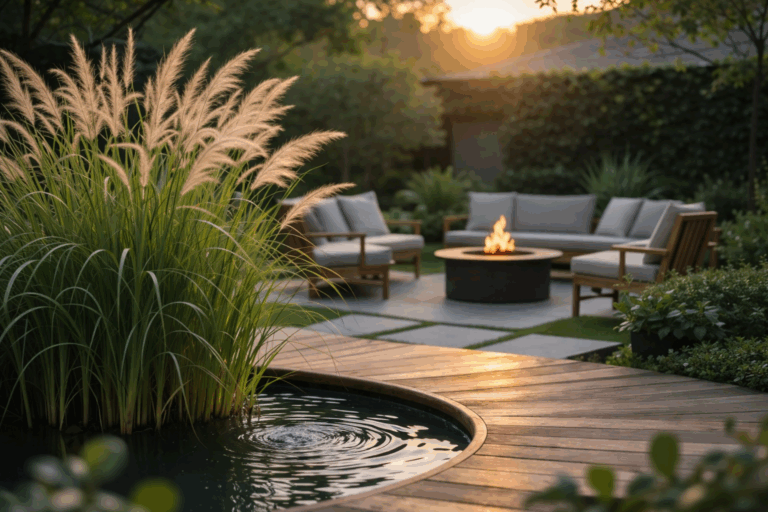
Designing for wind means allowing it to move naturally through the space. Open pathways, light fabrics, and flexible plants like tall grasses or hanging elements can respond beautifully to airflow.
Wind reminds us to breathe. It keeps the space from feeling still or heavy, adding a quiet sense of motion and ease.
Water: Sound and Stillness
Water introduces both sound and calm. Whether it is flowing, dripping, or resting still, it changes how a space is experienced.
The presence of water can:
· Mask background noise
· Create a steady, soothing rhythm
· Reflect light in soft, shifting ways
A small fountain, a bowl of water, or even a simple container that collects rain can add this element. The scale does not need to be large. What matters is the presence of movement or reflection.
Water invites attention without demanding it. It draws the mind into quieter state, making the space feel more grounded and peaceful.
Warmth: Comfort and Gathering
Warmth is what makes an outdoor space inviting, especially as the day transitions into evening.
Warmth can come from:
· Sunlight during the day
· Fire elements like a small pit or lantern
· Textiles such as blankets and cushions
This element encourages people to stay longer. It creates a sense of comfort and safety, allowing conversations to continue and moments to linger.
Warmth turns an outdoor space from a place you pass through into a place you gather in.
Layering the Senses Together
The true beauty of sensory design comes from combining these elements.
Imagine:
· A soft breeze moving through plants
· The quiet sound of water in the background
· The gentle warmth of evening light or fire
Together, these create an environment that feels balanced and complete. No single element dominates. Instead, they support each other, shaping a space that feels natural and calming.
Designing with Simplicity
You don’t need a large garden or elaborate setup to create a sensory outdoor space.
Start small:
· A chair placed where wind flows naturally
· A bowl of water or small fountain
· A soft light source for evening
Pay attention to how the space feels at different times of day. Adjust slowly. Let the design grow with use rather than forcing it all at once.
The Role of Presence
Even the most thoughtfully designed space requires one final element: presence.
To truly experience wind, water, and warmth, you must slow down. Sit. Listen. Feel. These spaces are not meant for rushing. They are meant for noticing.
When you engage with your surroundings through the senses, the space begins to support you in return.
Conclusion
Outdoor spaces that speak to the senses offer something deeper than visual beauty. They create moments of calm, connection, and quiet awareness.
At HayGood Manor, we believe that the most meaningful environments are the ones that invite you to feel fully present. By designing with wind, water, and warmth, you create a space that gently restores – one breath, one sound, one moment at a time.
Because sometimes, the most powerful design is not what you see, but what you feel when you step into it