Nature offers beauty that is often brief. A flower blooms for only a few days. Leaves change color and fall with the seasons. Yet these fleeting moments hold a quiet charm that many of us wish could last a little longer.
Nature-pressed décor is a gentle way to preserve that beauty. By pressing leaves, flowers, and small botanicals, we can turn temporary natural elements into lasting pieces for the home. These creations are not only decorative – they carry memory, place, and the calming presence of nature indoors.
At HayGood Manor, we believe that the most meaningful homes reflect the natural world around them. Pressed botanicals allow us to bring a piece of the garden inside, creating décor that feels personal, organic, and quietly timeless.
The Beauty of Preserving Nature
Pressed flowers and leaves capture a moment in time. A bloom picked from a garden path, a leaf gathered during an autumn walk, or a small wildflower found during travel can become something that lasts far beyond its natural life.
When pressed and preserved carefully, these pieces maintain their delicate shapes and subtle colors. Over time, they become reminders of seasons, places, and experiences.
Instead of simply admiring nature for a moment, we give it a place within the home.
Why Nature-Based Décor Feels Meaningful
Unlike store-bought decorations, pressed botanical pieces often carry personal stories. The leaves might come from a tree in your yard. The flowers might be from a special celebration or a quiet walk through the countryside.
Because of this, nature-pressed décor feels more intimate. It connects the home to real experiences rather than trends.
A small framed leaf can hold the memory of a season. A pressed flower may remind you of a garden that once bloomed brightly.
These pieces become quiet storytellers.
How to Press Leaves and Flowers
Pressing botanicals is simple and requires very few materials.
Basic method:
1. Choose fresh flowers or leaves that are relatively flat.
2. Place them between two sheets of parchment paper or plain paper.
3. Put the paper inside a heavy book.
4. Add extra weight if needed.
5. Leave them to dry for 1-2 weeks
Once dried, the botanicals will be thin, delicate, and ready to use in creative ways.
Creative Ways to Use Pressed Botanicals
Pressed leaves and flowers can be used in many subtle ways throughout the home.
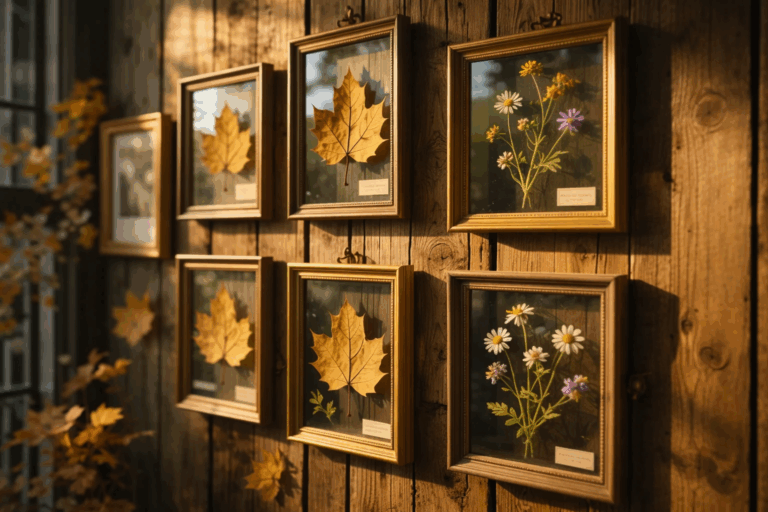
Framed botanical art
Place pressed leaves or flowers in simple frames to create natural wall art.
Handmade greeting cards
Attach small pressed flowers to cards for meaningful, handmade messages.
Glass décor
Sandwich botanicals between two pieces of glass for a delicate display.
Bookmarks
Pressed flowers make beautiful, personal bookmarks.
Table settings
Use small pressed leaves as place cards or decorations for gatherings.
These small touches bring natural beauty into everyday spaces.
Seasonal Pressing Traditions
Nature-pressed décor can also become a seasonal ritual.
Spring flowers.
Summer garden herbs.
Autumn leaves.
Winter greenery.
Each season offers its own textures and colors. By pressing botanicals throughout the year, you create a collection that reflects the changing landscape around your home.
Over time, this collection becomes a record of seasons lived and enjoyed.
A Gentle, Sustainable Form of Decorating
Nature-pressed décor also supports a slower, more sustainable approach to decorating. Instead of buying new decorative items each season, you can create meaningful pieces using what nature provides.
These decorations are biodegradable, simple, and deeply connected to the environment.
They remind us that beauty does not always need to be manufactured.
Conclusion
Nature-pressed décor allows us to hold onto small moments of beauty that might otherwise disappear. By preserving leaves and flowers, we transform temporary pieces of nature into lasting reminders of the seasons and places we love.
At HayGood Manor, we believe homes feel most peaceful when they remain connected to the natural world. Pressed botanicals bring that connection indoors in the most gentle way – through texture, memory, and quiet beauty.
Because sometimes the simplest decorations carry the deepest meaning: a leaf from a walk, a flower from the garden, or a small piece of nature thoughtfully preserved for years to come.