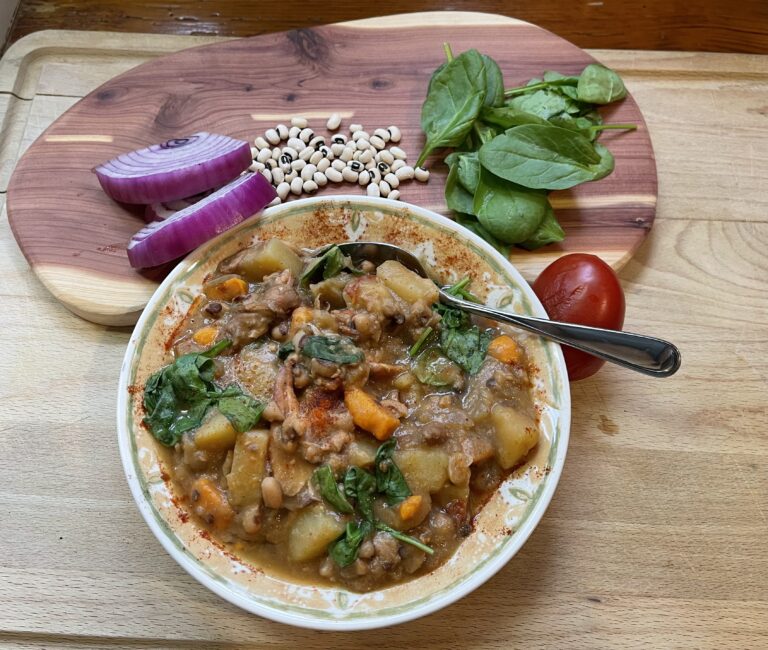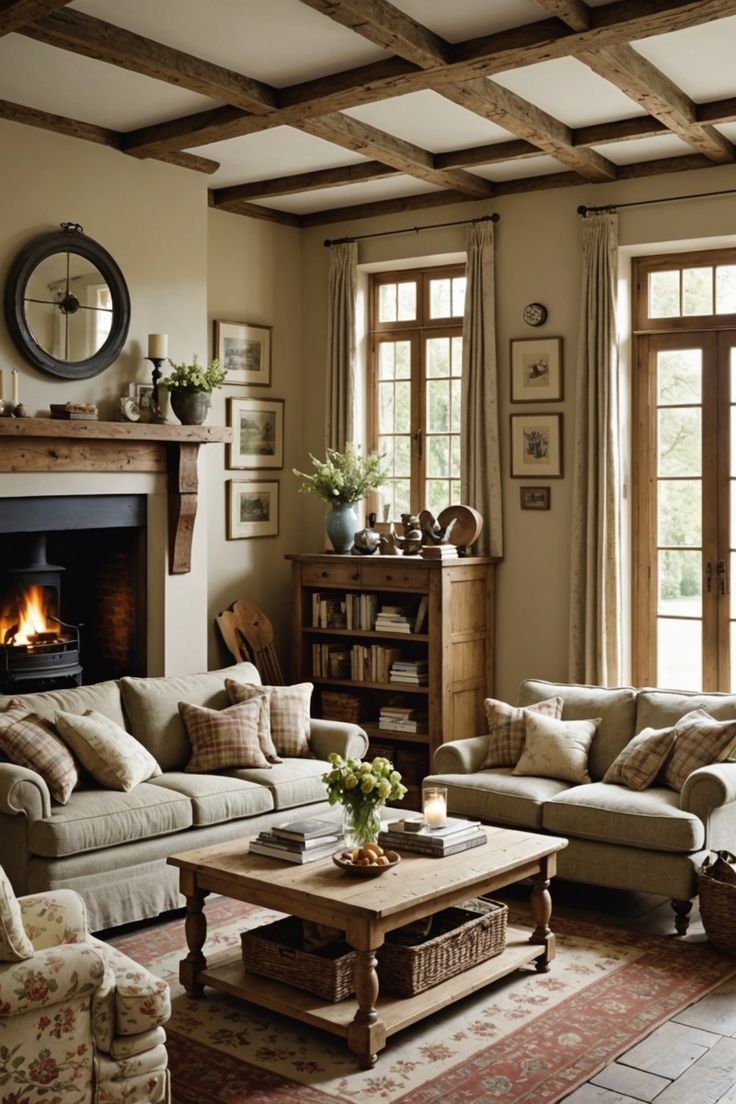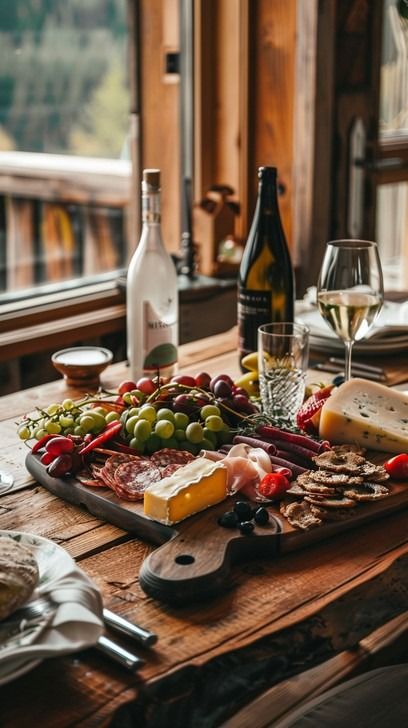
There is a certain kind of cooking that cannot be written down.
It doesn’t begin with a list of ingredients or a set of measured steps. It begins with familiarity – with the quiet confidence of knowing what feels right. A handful of this, a little of that, a pause to taste, a moment to adjust. It is less about precision and more about presence.
At HayGood Manor, we see this way of cooking as something deeply personal. It lives in the spaces between generations, carried not through cookbooks, but through memory, observation, and time spent together in the kitchen.
The Unwritten Knowledge of the Kitchen
Some of the most meaningful dishes are never recorded. They exist in motion – in the way someone reaches for spices without looking or knows exactly when to lower the flame.
This knowledge is not taught in the traditional sense. It is absorbed.
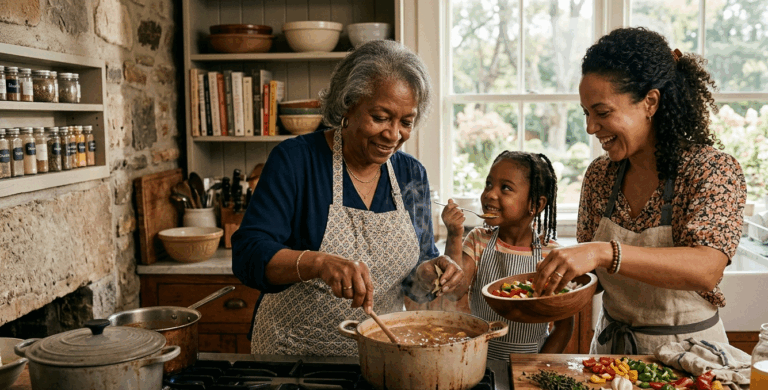
A child standing nearby.
A quiet observation of how a meal comes together.
The repetition of everyday cooking, slowly becoming familiar.
Over time, this becomes instinct. Not rushed, not forced – simply known.
Cooking as Memory in Motion
When we cook without recipes, we often follow something deeper than instruction. We follow memory.
Not exact measurements, but impressions:
The warmth of a dish.
The balance of flavors.
The way it once filled a room with scent.
Even when ingredients change or proportions shift, the essence remains. The dish becomes less about accuracy and more about recognition – a quiet return to something that once felt like home.
Tradition Without Exactness
In many homes, recipes were never written down because they were never meant to be fixed. They were meant to live, to adopt, to evolve with each person who prepared them.
One cook adds more spice.
Another softens the flavor.
A third simplifies the process.
Yet the dish remains familiar.
This is how tradition continues – not through repetition alone, but through interpretation. Each version carries the past while allowing space for the present.
The Freedom of Cooking by Feel
There is a kind of ease that comes when cooking is no longer bound by strict steps. The kitchen becomes quieter, more intuitive.
You cook based on what is available.
You adjust based on taste.
You trust the process rather than control it.
This freedom allows creativity, but more importantly, it allows connection – to the food, to the moment, and to the people who once cooked the same way.
A sensory Way of Being
Without a recipe, the senses take the lead.
The sound of something gently simmering.
The scent that signals readiness.
The texture that changes under your hands.
Cooking becomes slower, more attractive. It asks you to stay present, to notice, to respond. In this way, it becomes more than a task. It becomes a rhythm.
What Makes These Meals Feel Like Home
Meals made without recipes often carry a different kind of comfort. They are not exact, but they are familiar. Not perfect but deeply satisfying.
They remind us of kitchens where measurements were never needed – where care was the guiding principle, and taste was the final decision.
These meals feel like home not because they are identical each time, but because they are made with the same quiet intention.
Conclusion
Cooking without recipes is not about abandoning structure. It is about trusting what has been learned over time – through memory, repetition, and shared experience.
At HayGood Manor, we honor the kitchens where this kind of cooking still exists. Where traditions are passed not through written pages, but through hands, senses, and moments spent together.
Because sometimes, the most meaningful meals are not the ones you follow step by step – they are the ones you already know, without needing to explain how.