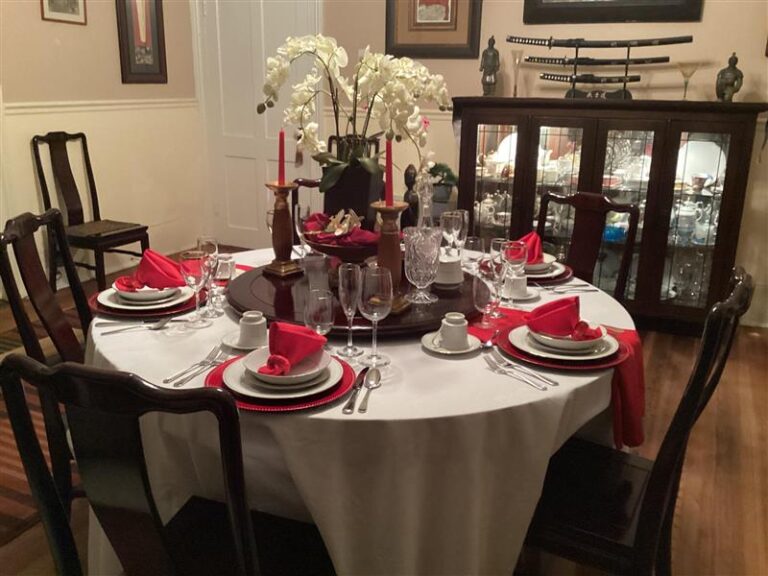
A dining table is more than a piece of furniture. It is a gathering place, a witness to daily life, and often the quiet center of a home. But just as important as the table itself are the chairs around it. Who sits where, how many chairs are pulled up, and how often they are used can reveal a great deal about a family’s culture, values, and way of being together.
At HayGood Manor, we believe that the smallest details of a home often carry the deepest meaning. Seating around the table is one such detail – simple on the surface, yet rich with unspoken stories.
The Table as a Shared Space
In many homes, the dining table is where life slows down. Meals are shared, conversations unfold, and routines take shape. The chairs around the table hold space for connection. They invite people to sit, stay, and participate.
A home where chairs are always ready – even if not perfectly matched – often reflects openness. It suggests that there is room for everyone, expected or unexpected. Extra chairs tucked nearby or easily pulled in speak of hospitality and welcome.
Assigned Seats and Familiar Comfort
In some families, everyone has a “usual” chair. These unspoken arrangements form naturally over time. One person prefers the chair closest to the kitchen, another chooses the spot with the best view, while someone else always sits at the head of the table.
These patterns aren’t about control – they are about comfort and familiarity. Knowing where you belong at the table brings a quiet sense of ease. It reflects stability, routine, and a shared understanding of family rhythms.
Assigned seats often say: This is a place you can return to.
Mismatched Chairs and Flexible Living
Not all dining sets are uniform. Some tables are surrounded by chairs collected over time – different styles, shapes, and materials brought together out of need or sentiment.
Mismatched chairs often reflect a family culture that values function over form. These homes prioritize togetherness over appearance. What matters is not how the table looks, but who is sitting around it.
In such spaces, seating adapts easily. Chairs are borrowed, moved, or replaced as life changes. This flexibility often mirrors a household that welcomes growth, change, and individuality.
How Often the Chairs Are Used
Some chairs are used daily, showing signs of wear-softened edges, creaking joints, faded finishes. Others are brought out only for special occasions.
Homes where chairs are frequently used tend to value shared meals and regular connection. Sitting together becomes part of daily life rather than a special event.
Wear on chairs is not a flaw; it is evidence of presence. It shows that people have gathered, lingered, and made time for one another.
Space at the Table Reflects Values
The way chairs are spaced also speaks quietly about family culture. Tightly placed chairs suggest closeness and familiarity. More spacious arrangements may reflect a need for personal space and calm.
Neither is right or wrong. Each reflects how a family communicates, relates, and shares time. The table becomes a mirror of these dynamics.
The Head of the Table and Shared Authority
In some homes, the head of the table holds meaning – perhaps reserved for a parent, elder, or guest. In others, no seat holds special status.
This difference often reflects how authority and decision making are shared. A single “head” may suggest tradition and structure. An open arrangement can reflect equality and shared voices.
Both approaches reveal values passed down quietly through daily practice.
Chairs as Witnesses to Change
Over time, chairs around the table witness change. Children grow taller. Family members come and go. New people are welcomed. Some chairs may remain empty for a while, while others are added.
Through all of this, the table adjusts. The chairs rearrange. Life continues.
These shifts remind us that family culture is not fixed – it evolves with time, shaped by presence, absence, and shared experience.
Conclusion
Chairs around the table may seem ordinary, but they carry meaning far beyond their function. They speak of who is welcomed, how space is shared, and what a family values most.
At HayGood Manor, we celebrate homes where chairs are pulled up with ease, where tables invite conversation, and where seating reflects care rather than perfection.
Because in the end, it’s not the table or the chairs themselves that matter – it’s the people who gather there, again and again, shaping family culture one shared moment at a time.