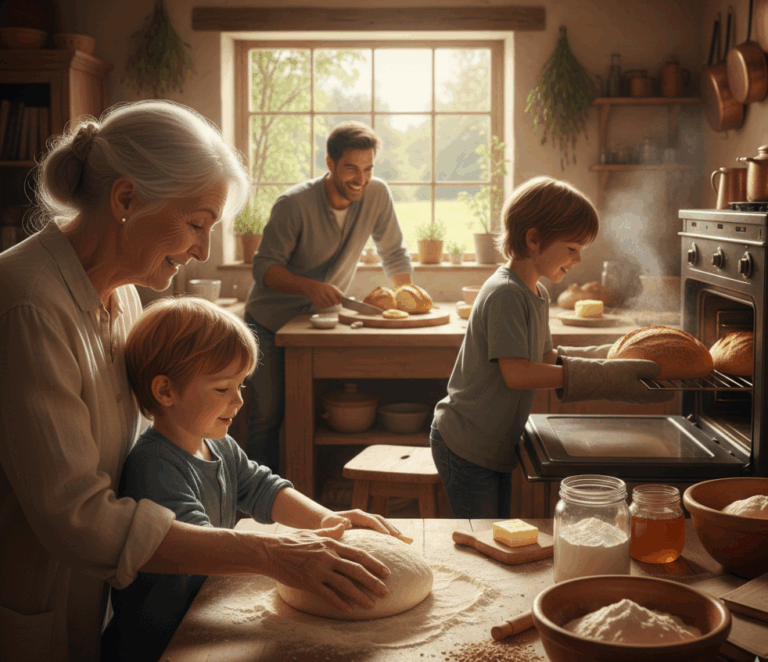
Few things feel as comforting as the smell of bread baking in the oven. It fills the house slowly, reaching into corners, wrapping itself around staircases, slipping under doors. Long before the loaf is sliced, it has already begun its work – gathering people toward the kitchen.
Bread is one of the oldest shared foods in the world. Simple ingredients – flour, water, yeast, salt – transformed through patience and warmth. Yet beyond nourishment, bread carries something deeper: belonging.
At HayGood Manor, we believe that homemade bread is more than a recipe. It is an invitation. An act of care. A quiet way of saying, there is enough here for you.
The Slow Ritual of Making Bread
Bread asks us to slow down.
You measure carefully.
You mix gently.
You knead patiently.
You wait while the dough rises.
In a world of instant meals and rushed schedules, bread-making feels almost rebellious. It refuses to be hurried. The waiting becomes part of the experience. The rising dough sits quietly on the counter, teaching patience without words.
Children often wander into the kitchen during this process – curious about the soft dough, wanting to press their hands into it. Conversation flows more easily when hands are busy. The kitchen becomes less about production and more about presence.
The Smell That Calls Everyone Home
There is something universal about the scent of baking bread. It signals warmth and safety. It suggests that someone is preparing something with care.
Even those who are not hungry drift toward the kitchen. The smell alone invites gathering. It draws people from different rooms into one shared space.
Bread, in this way, becomes a silent host.
Breaking Bread as a Shared Act
When the loaf is finally sliced, there is a natural pause. Steam escapes. Butter melts into warm crumb. Plates are passed.
Breaking bread together has always symbolized connection. It levels differences. It invites conversation. It encourages staying at the table a little longer.
Unlike individual servings, bread is shared. One loaf feeds many. Each slice is part of the same whole. This simple act mirrors family life itself – separate pieces, belonging to one shared center.
Imperfection Makes It Personal
Homemade loaves are rarely identical. They may rise unevenly. The crust may crack. The shape may lean slightly to one side.
But these imperfections are part of the charm. They remind us that the bread was shaped by human hands, not machines. Each loaf reflects the mood, weather, and time given to it.
Families often remember “how it turned out” – the loaf that was too dense, the one that rose beautifully, the one made on a rainy afternoon. These small stories become part of family memory.
Passing The Tradition Forward
Bread-making often moves through generations. A recipe scribbled in a notebook. A technique learned by watching. A secret tip shared quietly.
When one generation teaches another to knead dough, they pass down more than skill. They pass down rhythm, patience, and care. The act itself becomes memory in motion.
Years later, the smell of yeast may carry someone back to that first lesson.
Bread as Emotional Anchor
In times of uncertainty or stress, many people return to baking bread. There is comfort in working with your hands. Comfort in repetition. Comfort in creating something that feeds others.
The steady process offers grounding. The finished loaf offers reassurance. Together, they create a sense of stability within the home.
Bread becomes a reminder that nourishment can be simple and shared.
Conclusion
Homemade bread does more than fill the table. It fills the home with warmth, patience, and belonging. It gathers people, invites conversation, and creates memories that linger long after the last slice is gone.
At HayGood Manor, we celebrate the quiet rituals that bring families together. Bread-making is one of the oldest and simplest of these rituals – yet its impact is lasting.
Because when flour and water come together with time and care, they create more than a loaf.
They create a reason to gather.
A reason to pause.
A reason to belong.