Not every story in a home is spoken. Some live quietly in the corners we pass every day without noticing – the space behind a door, the chair no one moves, the shelf that holds the same objects year after year. These corners rarely draw attention, yet they carry a depth of meaning that words often cannot.
At HayGood Manor, we believe that homes are full of unspoken narratives. While living rooms and dining tables stories of togetherness and celebration, it is often the hidden corners that hold the most personal truths.
Why Some Stories Stay Quiet
Not all experiences ask to be shared. Some moments are private, tender, or too layered to explain. Homes instinctively make room for these unspoken parts of our lives.
A corner where someone once sat every morning.
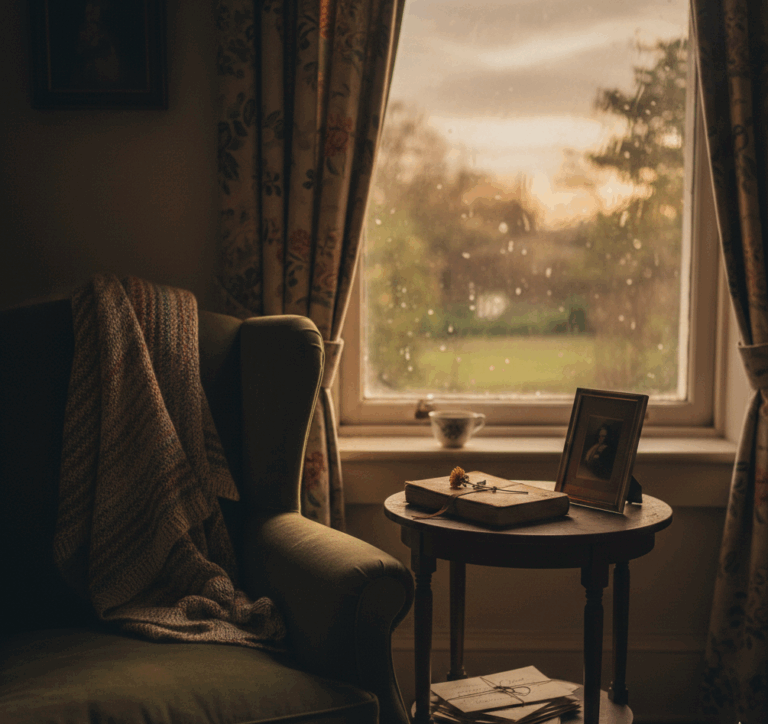
A window ledge that caught tears and sunsets alike.
A drawer that holds letters no longer read, but never thrown away.
These spaces are not forgotten – they are kept.
Corners as Emotional Containers
Hidden corners often become emotional containers without us realizing it. We place objects there not for display, but for safekeeping. Over time, the corner absorbs meaning through repetition and presence.
A chair becomes more than furniture.
A shelf becomes more than storage.
A corner becomes a quiet witness.
These areas hold emotion gently, without judgment or interruption.
The Comfort of the Unnoticed
There is comfort in spaces that are not observed by others. Hidden corners allow us to exist without explanation. They offer privacy within our own homes – a rare and necessary gift.
In these corners, we don’t perform.
We don’t tidy for guests.
We don’t edit ourselves.
The absence of attention makes room for authenticity.
Objects That Stay Where They Are
Every home has objects that never move. They may not match the décor or serve an obvious purpose anymore, yet they remain.
A folded shawl.
An old notebook.
A framed photograph turned slightly inward.
These objects stay because they carry memory. Moving them would feel like disturbing something sacred.
Their placement is intentional, even if unconscious.
Quiet Corners as Places of Healing
Some corners become spaces of healing – not through action, but through stillness. They offer a place to sit when words fail, to pause when life feels heavy.
Healing doesn’t always need light or openness. Sometimes, it needs privacy and softness. A quiet corner provides that – a place where emotions can exist without needing to be resolved.
These spaces teach us that healing can be subtle and slow.
Why We Rarely Talk About Them
Hidden corners are rarely mentioned because their meaning is deeply personal. Explaining them can feel like exposing something fragile.
These spaces often carry:
- Grief that has softened with time
- Joy that was private and fleeting
- Moments that shaped us quietly
They don’t need validation. Their value lies in being held, not shared.
Letting Corners Remain Quiet
Not every corner needs to be styled, shared, or understood by others. Some are meant to remain as they are – untouched, familiar, and quietly meaningful.
Resisting the urge to explain or display these spaces is a form of respect. It allows the home to remain layered, honest, and emotionally rich.
Conclusion
The stories we don’t tell are not lost – they are stored gently within the quiet corners of our homes. These spaces hold memory, emotion, and meaning without asking for attention.
At HayGood Manor, we honor homes not only for what they show, but for what they protect. Because sometimes, the most important stories are the ones that live quietly – held by a corner, remembered without words, and felt rather than spoken.
A home that allows space for silence is a home that truly understands its people.