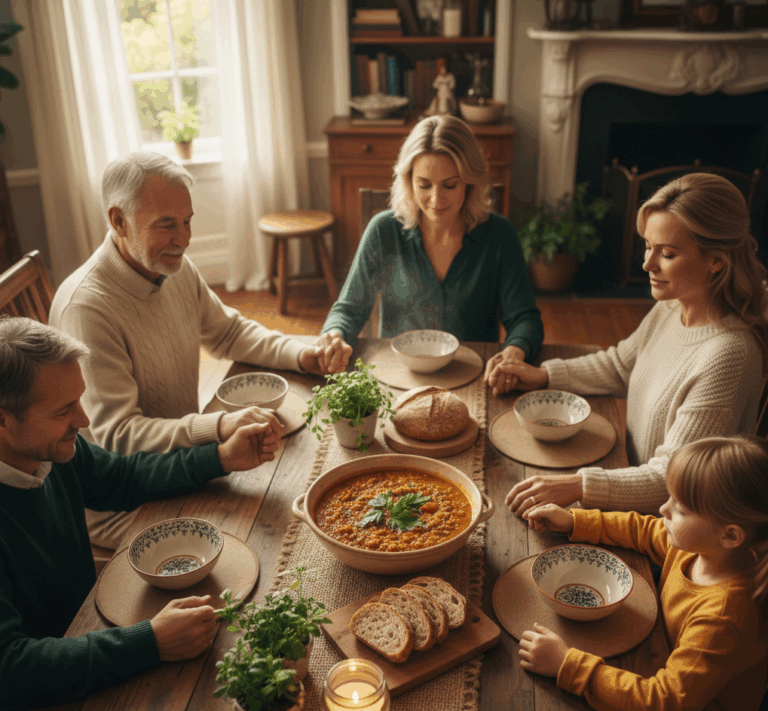
Before the food is tasted, before plates are passed, and before conversation begins, there is often a pause. Sometimes it is brief. Sometimes it is spoken aloud. Sometimes it is quiet and inward. This pause – a mealtime blessing – may seem small, but it carries deep meaning.
At HayGood Manor, we believe that meals are about more than nourishment. They are about connection, gratitude, and the shared rhythm of family life. Mealtime blessings, in whatever form they take, help transform a table into a place of warmth and intention.
Why Blessings Matter at the Table
A blessing is not only a prayer. It is a moment of awareness. It signals that we are about to slow down, come together, and share something meaningful.
In busy households, meals can easily become rushed – eaten between schedules, screens, and responsibilities. A blessing gently interrupts that pace. It reminds everyone present that this moment matters.
Even a few simple words can:
- Create calm before eating
- Encourage gratitude
- Bring focus back to togetherness
- Help everyone feel included
Blessings ground the meal in purpose, not just routine.
Blessings as Family Culture
In many homes, mealtime blessings are passed down through generations. The words may stay the same, or they may change over time, but the feeling remains familiar.
Children learn early that this pause is part of the meal. It becomes a signal of care, respect, and shared values. Over the years, those words carry memory – echoing voices from the past and shaping moments in the present.
In some families, the blessing is spoken aloud. In others, it is silent. In many, it changes depending on who is at the table.
What matters is not the wording, but the intention behind it.
Words That Warm the Table
A mealtime blessing doesn’t need to be formal or religious to be meaningful. It can be simple, heartfelt, and natural.
Some examples:
- A quiet “thank you” before eating
- A moment of silence
- A shared sentence about gratitude
- A few words acknowledging the effort behind the meal
These words warm the table by reminding everyone that food is a gift – prepared, shared, and received together.
Creating Your Own Mealtime Blessing
The most meaningful blessings are the ones that feel true to your home.
Ask yourself:
- What does our family value?
- What do we want to acknowledge before we eat?
- How do we want the table to feel?
Your blessing might express gratitude for:
- The food itself
- The people gathered
- The day that has passed
- The care that went into preparing the meal
It can change with the seasons, the guests, or even the mood of the day. Consistency matters more than perfection.
Why Blessings Create Belonging
Mealtime blessings create a shared starting point. Everyone pauses together. Everyone begins together.
This simple act builds connection. It makes each person at the table feel seen and included. Over time, it becomes part of the home’s rhythm – a familiar comfort that turns ordinary meals into meaningful ones.
A table where gratitude is practiced becomes a place people want to return to.
A Simple Comfort Recipe to Share at the Table
To accompany your mealtime blessing, here is a simple, warming family recipe – easy to prepare and perfect for shared moments.
Homestyle Lentil & Vegetable Stew
Ingredients:
- 1 cup lentils (washed)
- 1 onion, chopped
- 2 carrots, sliced
- 1 potato, cubed
- 2 cloves garlic, minced
- 1 tsp cumin
- ½ tsp black pepper
- Salt to taste
- 4 cups water or vegetable broth
- 1 tbsp oil
Method:
- Heat oil in a pot and sauté onion and garlic until soft.
- Add carrots and potato, stirring gently.
- Add lentils, cumin, pepper, and salt.
- Pour in water or broth and bring to a boil.
- Lower heat and simmer for 25-30 minutes until lentils are tender.
- Serve warm, with bread or rice.
This stew is simple, nourishing, and perfect for slow meals and shared conversation.
Conclusion
Mealtime blessings are not about ceremony – they are about presence. They remind us to pause, appreciate, and come together before we eat.
At HayGood Manor, we cherish tables where food is shared with intention., words are spoken with care, and gratitude is practiced quietly but consistently.
Because when a meal begins meaning, it doesn’t just feed the body – it warms the heart, strengthens connection, and turns everyday dining into something lasting.